


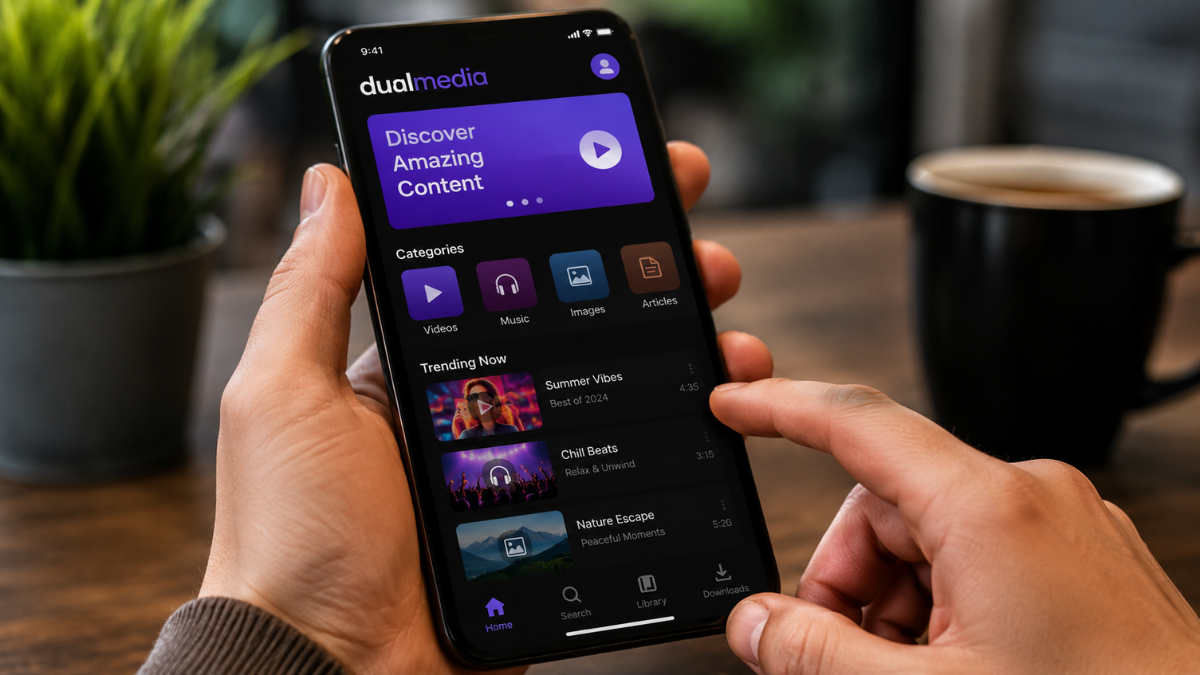
If you have ever typed “application mobile dualmedia” into a search bar, chances are you are either running a business that needs a strong mobile presence, or you are simply curious about what makes a well-built app stand out from the thousands of forgettable ones sitting unused on people’s phones. Either way, you have landed in the right place.
Mobile apps are no longer a “nice to have” extra for companies. They are often the very first place a customer interacts with a brand, and first impressions matter more on a five-inch screen than almost anywhere else. That is exactly where the idea behind application mobile dualmedia comes in — a practical, results-driven approach to designing and building mobile applications that actually solve problems, rather than just looking pretty in a portfolio.
In this article, we will walk through everything you need to know: what this approach involves, why it matters, how the development process typically works, what it might cost, and the mistakes most businesses make before they even write a single line of code. Grab a coffee, because we are going deep on this one.
What Is Application Mobile Dualmedia?
At its core, application mobile dualmedia refers to a mobile app development philosophy that blends thoughtful design with solid, dependable engineering. It is not about chasing every trendy feature or copying whatever the biggest app on the market is doing. Instead, it focuses on building something that fits the actual needs of the business and, more importantly, the people who will be tapping on it every day.
Think of it less as a single product and more as a working method. Teams following this approach usually start with real conversations — with business owners, with end users, with support staff who hear customer complaints firsthand — before ever opening a design tool. That grounding in real feedback is what separates an app that people delete after one use from an app that becomes part of someone’s daily routine.
Another important part of this approach is flexibility across platforms. Whether a business needs something for iOS, Android, or both at once, the underlying goal stays the same: a smooth, reliable experience no matter what device someone is holding. This cross-platform mindset is one of the reasons the term has picked up traction among small businesses and larger companies alike who are searching for a smarter way to go mobile.
Why Businesses Need a Custom Mobile App Today
Let us be honest — not every business needs an app just for the sake of having one. But for a huge number of companies, a website alone simply cannot keep up with how customers behave now. People check their phones dozens of times a day, and they expect quick access to whatever they are looking for, whether that is booking a table, tracking a delivery, or reordering something they bought last month.
A well-built mobile application removes friction. Instead of a customer typing a web address into a browser, waiting for pages to load, and pinching to zoom on tiny text, they simply tap an icon they already trust. That convenience builds loyalty in a way that a generic mobile website rarely can. This is one of the strongest arguments in favor of investing in something like application mobile dualmedia rather than settling for a stripped-down mobile version of an existing site.
There is also the matter of direct communication. Push notifications, in-app messaging, and personalized offers are tools that simply do not exist on a browser tab. A restaurant can remind a regular customer about a lunch special. A gym can nudge someone who has not checked in for a week. These small touches build a relationship, and relationships are what keep customers coming back instead of drifting toward a competitor.
Key Features of Dualmedia’s Mobile App Solutions
Every solid mobile app shares a handful of qualities that separate it from the crowd, and the dualmedia approach leans heavily on getting these fundamentals right before adding anything flashy on top. Speed is usually the first priority. An app that takes several seconds to open or lags when scrolling will lose users fast, no matter how attractive the interface looks.
Security comes right after speed. With more transactions, logins, and personal details being handled through mobile devices, users are rightfully cautious. Encrypted data storage, secure payment gateways, and clear privacy practices are built in from the start rather than bolted on as an afterthought.
Offline functionality is another feature that often gets overlooked until it is too late. Not everyone has a stable connection at all times, and an app that completely freezes without internet access frustrates users quickly. Smart caching and offline modes keep the experience usable even in a subway tunnel or a rural area with patchy signal.
Finally, there is the interface itself — clean, intuitive, and free of clutter. A good design does not need instructions. Buttons are where people expect them, menus make sense on the first try, and the whole experience feels familiar even to someone opening the app for the very first time.
The Development Process Behind Application Mobile Dualmedia
Building an app under this philosophy usually starts long before any coding happens. Discovery sessions are held with stakeholders to understand the actual business goals — is the app meant to drive sales, reduce support calls, build a loyal community, or something else entirely? Skipping this step is one of the biggest reasons apps fail to deliver a return on investment.
Once the goals are clear, wireframing and prototyping take over. This stage is all about mapping out the user journey on paper or in a design tool before a single line of code exists. It is much cheaper to change a button’s position in a sketch than to rebuild an entire screen after launch.
Development then moves into sprints, often following an agile methodology where small, testable pieces of the app are built, reviewed, and refined in short cycles. This keeps the whole team — designers, developers, and the client — aligned and able to catch issues early rather than discovering a major flaw right before launch.
Testing is not a single step at the end; it runs alongside development the whole way through. Functional testing, performance testing, and real device testing across different phone models all happen before the app goes anywhere near an app store. Only after all of that is the app submitted, published, and supported with regular updates based on real usage data.
Benefits of Choosing Dualmedia for Your Mobile App
One of the clearest benefits of this approach is the focus on long-term value rather than a quick launch followed by silence. Many agencies hand over a finished app and disappear, leaving the business to figure out bug fixes and updates on their own. A dualmedia-style partnership usually includes ongoing support, so the app keeps improving as user behavior and technology evolve.
Cost efficiency is another advantage worth mentioning. By focusing on the features that actually matter to users instead of piling on unnecessary extras, budgets get spent where they count. This lean approach to application mobile dualmedia often means a faster time to market without sacrificing quality.
There is also a strong emphasis on measurable results. Instead of vague promises about “engagement” or “user satisfaction,” teams track concrete numbers — download rates, retention after thirty days, average session length, and conversion rates inside the app. These numbers guide future updates instead of guesswork.
Native Apps vs Hybrid Apps: A Quick Comparison
Choosing between a native app and a hybrid app is one of the earliest decisions in any mobile project, and it has a real impact on cost, speed, and performance. Here is a simple breakdown to make the choice clearer.
| Factor | Native App | Hybrid App |
| Performance | Faster, optimized for one platform | Slightly slower, shared codebase |
| Development Cost | Higher, separate builds for iOS and Android | Lower, one codebase for both |
| Time to Market | Longer | Shorter |
| Access to Device Features | Full access (camera, GPS, sensors) | Good access, occasional limitations |
| Best For | Apps needing top performance, like games | Startups needing quick, budget-friendly launch |
Neither option is automatically “better.” A small business testing a new idea might benefit more from a hybrid build to keep costs low, while a company handling heavy data or complex graphics may need the raw performance only a native app can offer.
Real Success Stories and Client Feedback
Numbers matter, but so do the honest words of people who have actually gone through the process. One small business owner who switched from a basic website to a custom app put it simply:
“We didn’t expect our repeat customers to jump the way they did. Once ordering became a two-tap process instead of a five-minute browsing session, people just kept coming back.”
That kind of feedback is common once businesses feel the difference between a rushed app and one built with real strategy behind it. Another client, running a local service business, shared a similar sentiment after struggling with an outdated system:
“Our old app felt like it was built in 2012. The new one finally feels like it belongs on someone’s phone in this decade.”
These stories highlight something important — the value of application mobile dualmedia is not theoretical. It shows up in real retention numbers, real reviews on the app store, and real conversations business owners have with their customers.
Common Mistakes to Avoid When Building a Mobile App
Plenty of businesses jump into app development with excitement and end up making avoidable errors that cost time and money. One of the most frequent mistakes is trying to include every feature imaginable in the very first version. This “everything at once” approach usually delays launch and confuses users with a cluttered experience.
Ignoring platform guidelines is another common trap. Apple and Google both have specific design and functionality rules, and apps that ignore them risk rejection during the review process or a frustrating user experience that feels out of place on the device.
Skipping proper testing across different devices is also a costly shortcut. An app that looks great on the latest flagship phone might break entirely on an older or budget model still used by a large chunk of the market. Testing on a variety of screen sizes and operating system versions prevents embarrassing bugs after launch.
Lastly, many businesses underestimate the importance of post-launch support. An app is never really “finished.” Operating systems update, user expectations shift, and competitors release new features. Treating launch day as the finish line rather than the starting point is one of the fastest ways to watch an app fade into irrelevance.
How Much Does It Cost to Build an App Like This?
Pricing for a mobile app varies wildly depending on complexity, platform choice, and the depth of features required. A simple app with basic functionality might cost far less than a feature-rich application involving real-time data, payment processing, or complex user accounts.
Generally speaking, projects following the application mobile dualmedia approach are scoped around actual business needs rather than a one-size-fits-all package. This means a small local business and a growing e-commerce brand will likely receive very different quotes, because their goals, user base, and required features are simply not the same.
It is also worth remembering that cost is not just about the initial build. Hosting, maintenance, app store fees, and future updates all factor into the true long-term investment. Businesses that plan for these ongoing costs from the start tend to avoid unpleasant surprises a year or two down the line.
Future Trends Shaping Mobile App Development
Artificial intelligence continues to shape how apps understand and respond to users. From smarter recommendation engines to chatbots that actually resolve issues instead of frustrating people further, AI integration is quickly becoming a standard expectation rather than a bonus feature.
Voice interaction is also gaining ground, especially as smart speakers and voice assistants become part of everyday routines. Apps that support simple voice commands for search or navigation are positioning themselves ahead of competitors still relying purely on typing and tapping.
Another trend worth watching is the rise of super apps — single applications that combine messaging, payments, shopping, and services all in one place. While not every business needs to build a super app, the underlying lesson is clear: users increasingly value convenience and fewer app switches over having a dozen separate tools on their home screen.
Sustainability and data privacy are also becoming bigger talking points. Users are more aware than ever of how their data gets used, and apps that are transparent about privacy practices often earn more trust than those that bury permissions in fine print.
Conclusion About Application Mobile Dualmedia
At the end of the day, building a mobile app is not just a technical project — it is a direct line to how customers experience a brand every single day. The idea behind application mobile dualmedia is simple: focus on real user needs, build with care and proper testing, and keep improving after launch instead of walking away once the app hits the store. Businesses that follow this mindset tend to see stronger loyalty, better reviews, and a genuinely useful product rather than just another icon lost in a crowded home screen. Whether you are just starting to explore the idea or you are ready to move forward with a development partner, keeping these principles in mind will make the entire journey smoother and far more likely to succeed.
Frequently Asked Questions About Application Mobile Dualmedia
What exactly does application mobile dualmedia mean for a small business?
For a small business, it simply means approaching a mobile app the smart way — starting with real customer needs, keeping the design simple, and making sure the app actually solves a problem instead of existing just because “every business needs an app.” It is less about size and more about strategy.
How long does it usually take to build a mobile app?
Timelines depend heavily on complexity, but a straightforward app can often be ready within a few months, while more advanced projects involving custom features, integrations, or heavy backend work can take significantly longer. Discovery and testing phases also affect the overall schedule.
Is a hybrid app a good starting point for a new business?
In many cases, yes. A hybrid approach allows a business to launch on both iOS and Android without doubling the development cost, which is often ideal for testing an idea before committing to a fully native build later on.
What makes application mobile dualmedia different from just hiring any developer?
The difference lies in the process. Rather than jumping straight into coding, this approach prioritizes research, user experience planning, and ongoing support after launch, which tends to result in higher retention and fewer costly redesigns down the line.
Do I need a mobile app if my business already has a good website?
Not always, but a mobile app can offer advantages a website cannot, such as push notifications, offline access, and a faster, more personalized experience. Businesses with repeat customers or frequent interactions often benefit the most from making the switch.
How do I know if my app idea is worth building?
A good sign is whether the app solves a clear, recurring problem for your customers rather than simply mirroring your website. If people are already asking for faster ordering, easier booking, or better communication, that demand is usually a strong indicator that an app investment will pay off.
