


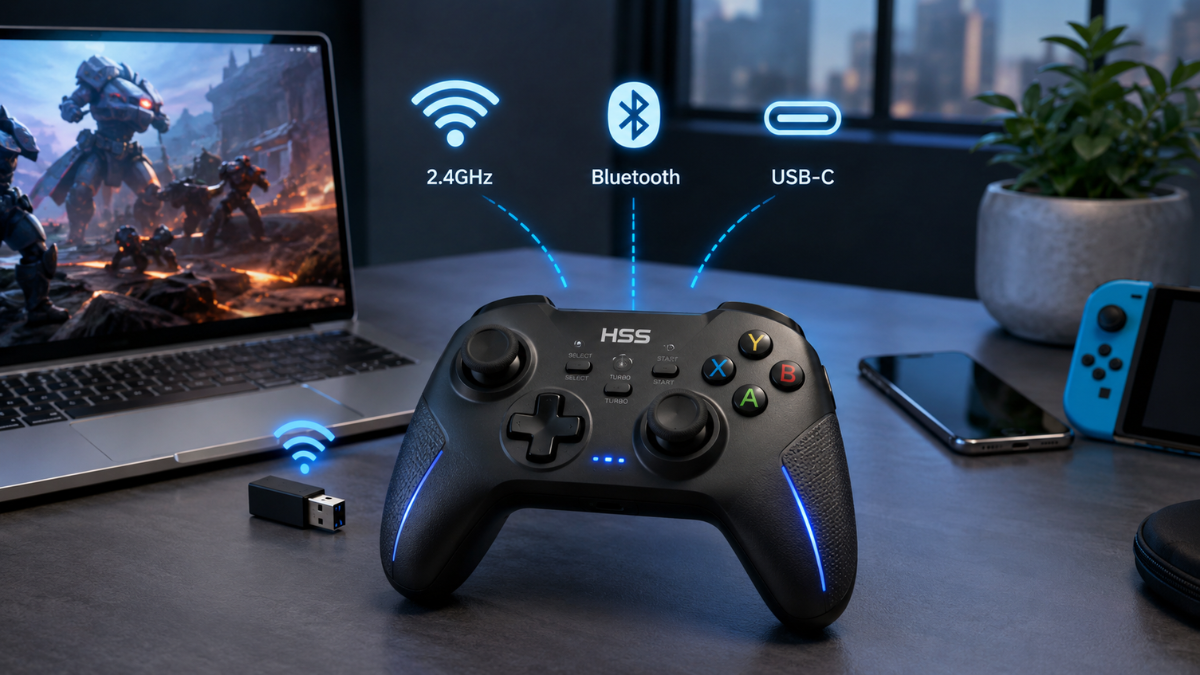
Struggling with connectivity hssgamepad issues? Discover simple fixes, pairing tips, and expert tricks to game lag-free in minutes.
If you’ve ever sat down for a quick gaming session only to watch your controller blink uselessly at your screen, you already know how frustrating connectivity hssgamepad problems can be. One second you’re ready to jump into your favorite match, and the next you’re Googling why your controller refuses to pair. The good news? Most of these hiccups are easier to fix than they seem, and once you understand how the connection actually works, you’ll rarely run into trouble again.
This guide walks you through everything you need to know about getting your gamepad connected reliably, whether you’re using it with a PC, a console, or a mobile device. We’ll cover pairing methods, common errors, troubleshooting steps, and a few pro tips that most people never bother to learn. By the end, you’ll have a controller that just works, every single time you pick it up.
Understanding How HSSGamepad Connectivity Works
Before diving into fixes, it helps to understand what’s actually happening behind the scenes. Most gamepads today rely on one of three connection methods: Bluetooth, a USB wireless dongle, or a direct wired USB connection. Each method has its own strengths, and knowing which one you’re using makes troubleshooting a lot less confusing.
Bluetooth is the most common choice because it doesn’t require plugging anything extra into your device. It’s convenient, but it can also be the trickiest to set up correctly, especially if your device has multiple paired accessories fighting for the same radio frequency. A wireless dongle, on the other hand, creates a dedicated signal between the controller and your console or computer, which usually means lower latency and fewer dropouts. Wired connections are the most stable of all, though obviously less convenient if you like to game from the couch.
Setting Up Your Gamepad for the First Time
Getting your controller paired correctly from day one saves you a ton of headaches down the road. Start by making sure your gamepad is fully charged or has fresh batteries, since low power is one of the sneakiest causes of pairing failures. Then put the controller into pairing mode, which usually involves holding down a specific button combination until an indicator light starts flashing.
On your device, whether that’s a PC, laptop, or console, open the Bluetooth or accessory settings menu and look for the gamepad in the list of available devices. Select it, confirm the pairing request if one pops up, and wait a few seconds for the connection to finalize. If everything goes smoothly, the indicator light on your controller will switch from flashing to solid, letting you know the pairing was successful. It sounds simple, and honestly, it usually is — the trouble tends to come later, when something interferes with an already-established connection.
Common Connectivity Issues and Why They Happen
Even after a successful setup, plenty of gamers run into intermittent problems. One of the most frequent complaints involves the controller randomly disconnecting mid-game, which is almost always caused by interference from other wireless devices nearby. Routers, microwaves, and even other Bluetooth accessories can create enough noise to disrupt a stable connection.
Another common issue is the controller failing to reconnect automatically after being turned off. This usually happens because the device forgot the pairing information, or because too many other devices are already connected and there’s no available slot. Battery drain is a sneaky third culprit; a controller running on its last few percent of charge will often behave erratically before it finally shuts off entirely, making it look like a connectivity problem when it’s really just a power issue in disguise.
<blockquote>”Nine times out of ten, when someone tells me their gamepad keeps disconnecting, the real issue is either battery level or wireless interference — not a broken controller,” says one veteran gaming tech reviewer.</blockquote>
Fixing Common HSSGamepad Connection Problems
If your controller won’t connect at all, the first thing to try is restarting both the gamepad and the device you’re connecting it to. This clears out any temporary glitches in the system’s memory and often resolves the issue immediately. If that doesn’t work, forget the device from your Bluetooth list entirely and re-pair it from scratch, since a corrupted pairing profile is a surprisingly common troublemaker.
For dropouts during gameplay, try moving closer to your console or PC, since distance and physical obstructions like walls or furniture can weaken the signal. It also helps to turn off other Bluetooth devices you’re not actively using, especially ones like wireless headphones or smart speakers that constantly broadcast a signal in the background. If none of these steps help, updating your device’s drivers or firmware is usually the next logical move, since outdated software is a frequent hidden cause of unstable connections.
Table: Quick Troubleshooting Reference
| Problem | Likely Cause | Quick Fix |
| Controller won’t pair | Low battery or pairing mode not activated | Charge fully, re-enter pairing mode |
| Random disconnects | Wireless interference | Move closer, turn off unused Bluetooth devices |
| Delayed input (lag) | Signal congestion or outdated drivers | Use USB dongle, update firmware |
| Won’t reconnect automatically | Forgotten pairing profile | Remove device and re-pair from scratch |
| Works wired but not wireless | Faulty Bluetooth adapter | Test on another device to confirm |
Improving Connection Stability for Competitive Gaming
If you play competitively or simply hate any hint of input lag, a few extra steps can make a noticeable difference. Switching from Bluetooth to a dedicated wireless dongle, when available, almost always improves response time because it avoids the shared bandwidth issues that come with standard Bluetooth connections. It’s a small change that can make your inputs feel noticeably snappier.
Keeping your gaming area free of unnecessary wireless clutter also goes a long way. Every extra Bluetooth device connected to your PC or console is competing for the same limited spectrum, so disconnecting anything you’re not using during a session can meaningfully reduce lag. Firmware updates matter here too; manufacturers frequently release small patches that specifically target connection stability, and skipping these updates means missing out on fixes that could solve your exact problem.
Compatibility Across Different Devices
One thing that trips up a lot of players is assuming a gamepad will behave identically across every device it connects to. In reality, compatibility can vary quite a bit between PCs, consoles, and mobile phones. Some devices support full Bluetooth functionality out of the box, while others need a specific app or driver installed before the controller is even recognized.
Mobile gaming has become especially popular, and thankfully, most modern gamepads are built with broad compatibility in mind. Still, it’s worth checking whether your specific phone or tablet requires additional setup, since Android and iOS handle Bluetooth accessories a little differently. Taking five minutes to confirm compatibility before you start playing can save you a frustrating troubleshooting session later.
Extending Battery Life for Better Connectivity
Battery health has a bigger impact on connection reliability than most people realize. A controller running low on power often struggles to maintain a stable Bluetooth link, leading to stuttering inputs or sudden disconnects that feel exactly like a hardware fault. Charging your gamepad fully before long sessions, and avoiding the habit of letting it drain to zero repeatedly, helps both battery longevity and connection stability.
If your controller uses replaceable batteries instead of a built-in rechargeable pack, always keep a spare set nearby. Weak batteries are notorious for causing exactly the kind of erratic behavior that gets mistaken for a broken pairing system, when the fix is as simple as swapping in fresh power. It’s a small habit that pays off every single time you sit down to play.
Tips for a Seamless Gaming Experience
A few small habits can dramatically reduce how often you deal with connectivity headaches. Keeping your device’s operating system and drivers updated ensures you’re always working with the latest bug fixes and compatibility improvements. It’s an easy step that many players skip simply because they don’t think about it until something breaks.
It also helps to designate a consistent spot for gaming where you know the wireless signal is strong and free from interference. Over time, you’ll get a feel for exactly how close you need to be to your console or PC for a rock-solid connection, and sticking to that setup removes a lot of guesswork. Pair that with routine firmware checks and proper battery care, and you’ll find that stable, dependable gameplay becomes the norm rather than the exception.
Conclusion About Connectivity Hssgamepad
At the end of the day, most connectivity hssgamepad issues come down to a handful of predictable causes: low battery, wireless interference, outdated firmware, or a corrupted pairing profile. Once you understand these patterns, troubleshooting becomes second nature instead of a frustrating guessing game. Take a few minutes to set things up properly, keep your software updated, and be mindful of nearby wireless clutter, and you’ll spend a lot more time playing and a lot less time fiddling with settings. Reliable gameplay isn’t complicated once you know what to look for, and now you do.
Frequently Asked Questions About Connectivity Hssgamepad
Why does my gamepad keep disconnecting randomly?
This usually happens because of wireless interference from nearby devices or a low battery. Try moving closer to your console or PC and charging the controller fully before your next session.
How do I fix connectivity hssgamepad pairing errors?
Start by forgetting the device in your Bluetooth settings and re-pairing it from scratch. This clears out any corrupted pairing data that might be causing the error.
Does using a wired connection solve connectivity problems?
Yes, a wired USB connection is generally the most stable option since it isn’t affected by wireless interference. It’s a great fallback if wireless pairing keeps giving you trouble.
Can outdated firmware cause connection issues?
Absolutely. Manufacturers often release updates specifically to fix connectivity bugs, so keeping your controller and device firmware current can resolve problems you didn’t even know were fixable.
Why does my controller work on one device but not another?
Compatibility settings differ between PCs, consoles, and mobile devices, so a gamepad might need different drivers or apps depending on what you’re connecting it to. Checking device-specific requirements beforehand can prevent this mismatch.
